What Do Babies Actually Need?
Less guesswork.
More clarity.
And a lot less “stuff” than you think.
A Simple Guide for New Parents
If you spend even a few minutes researching baby products, it can quickly feel overwhelming. There are endless lists of “must-haves”, conflicting opinions about what babies need and a huge number of products designed for every stage of development. For many parents (especially first-time parents) this can make decision-making feel impossible. The reality is , is that babies need far less than the baby industry might suggest. During the first years of life, development is driven primarily by interaction, exploration and movement, not by the number of toys or “stuff” in your home.
Once you understand this, parenting becomes a whole lot simpler.
The three things babies benefit from most
While some products can certainly be useful in the early days, most development comes from three key experiences.
1. Interaction
Babies learn through interaction with the people around them. Talking, singing, reading and responding to your baby helps build early communication skills and emotional security. Simple everyday moments such as narrating what you're doing, making eye contact and responding to their sounds all contribute to development.
2. Movement
Movement plays a huge role in early development. Time on the floor, opportunities to roll, crawl and explore, and space to move freely help babies develop strength, coordination and confidence. This is why simple setups like floor play mats and open spaces are often more valuable than complex baby equipment.
3. Exploration
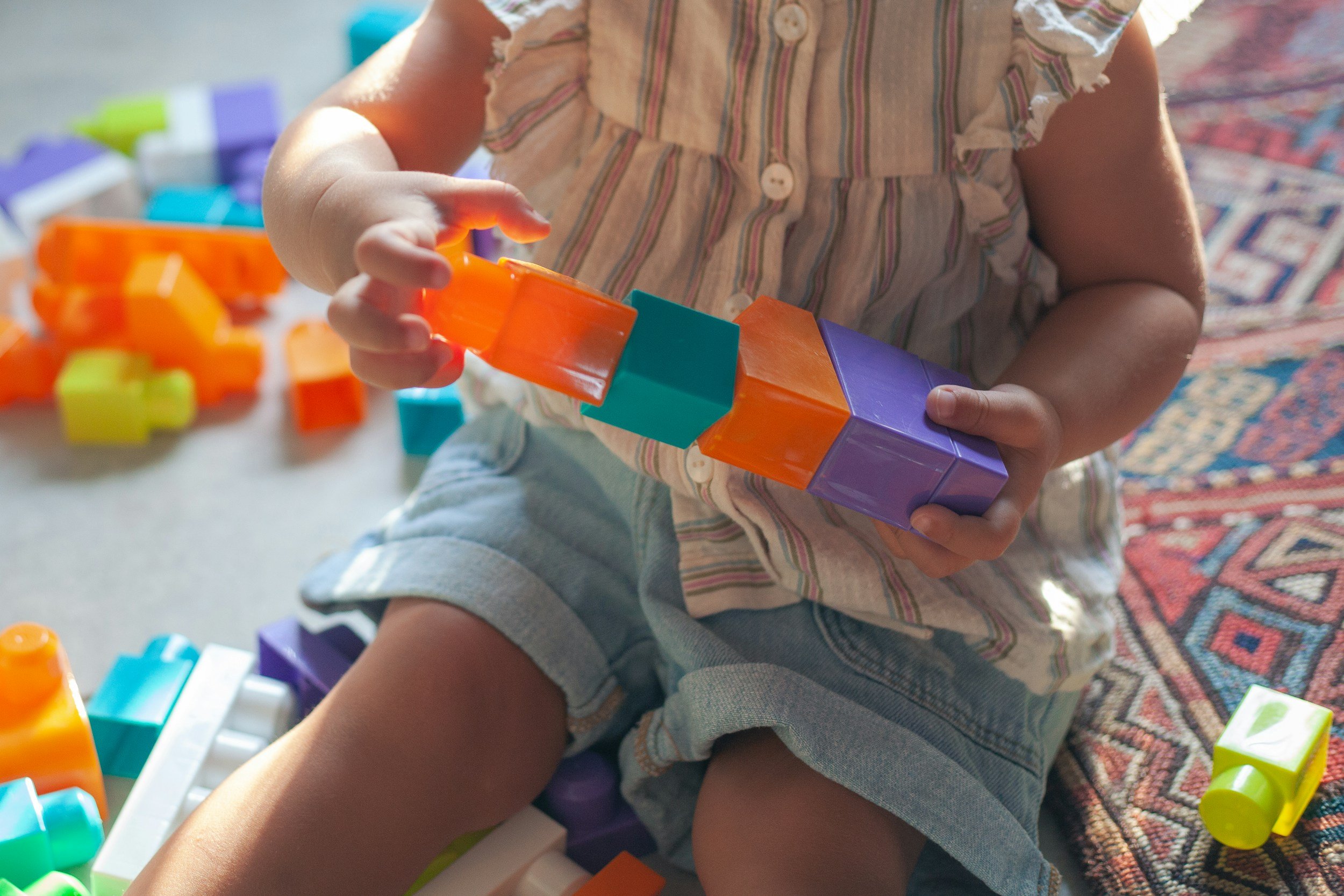
Babies are naturally curious and learn by touching, mouthing, dropping, shaking and manipulating objects. Simple toys that allow babies to experiment (rather than toys that do everything for them) often support learning more effectively.
Simple = best
Many parents are surprised to discover that babies often prefer very simple toys. Items like stacking cups, soft balls and board books allow babies to explore objects in their own way. These types of toys can be used differently as babies grow, making them useful across multiple stages. Open-ended toys (toys that can be used in many ways) tend to hold attention longer and encourage problem solving.
Understanding development in stages
One reason parenting can feel overwhelming is because children's needs change quickly. A toy that works well for a six-month-old may not be as interesting a few months later. Similarly, some toys marketed for babies may not actually match their developmental stage. Breaking early childhood into clear stages can make it easier to understand what might be helpful at any given time.
This is the approach Growlist takes.
Instead of endless product lists, Growlist focuses on:
• The stage your child is in
• The skills developing during that time
• The activities and products that may be useful right now
The goal is to provide guidance that feels simple and practical.
The takeaway
Babies don’t need a large number of toys or products to develop well.
What matters most is:
• Time to explore
• Opportunities to move
• Interaction with caregivers
• A small number of simple, versatile toys
Understanding what matters at each stage can help parents feel more confident about the choices they make.